


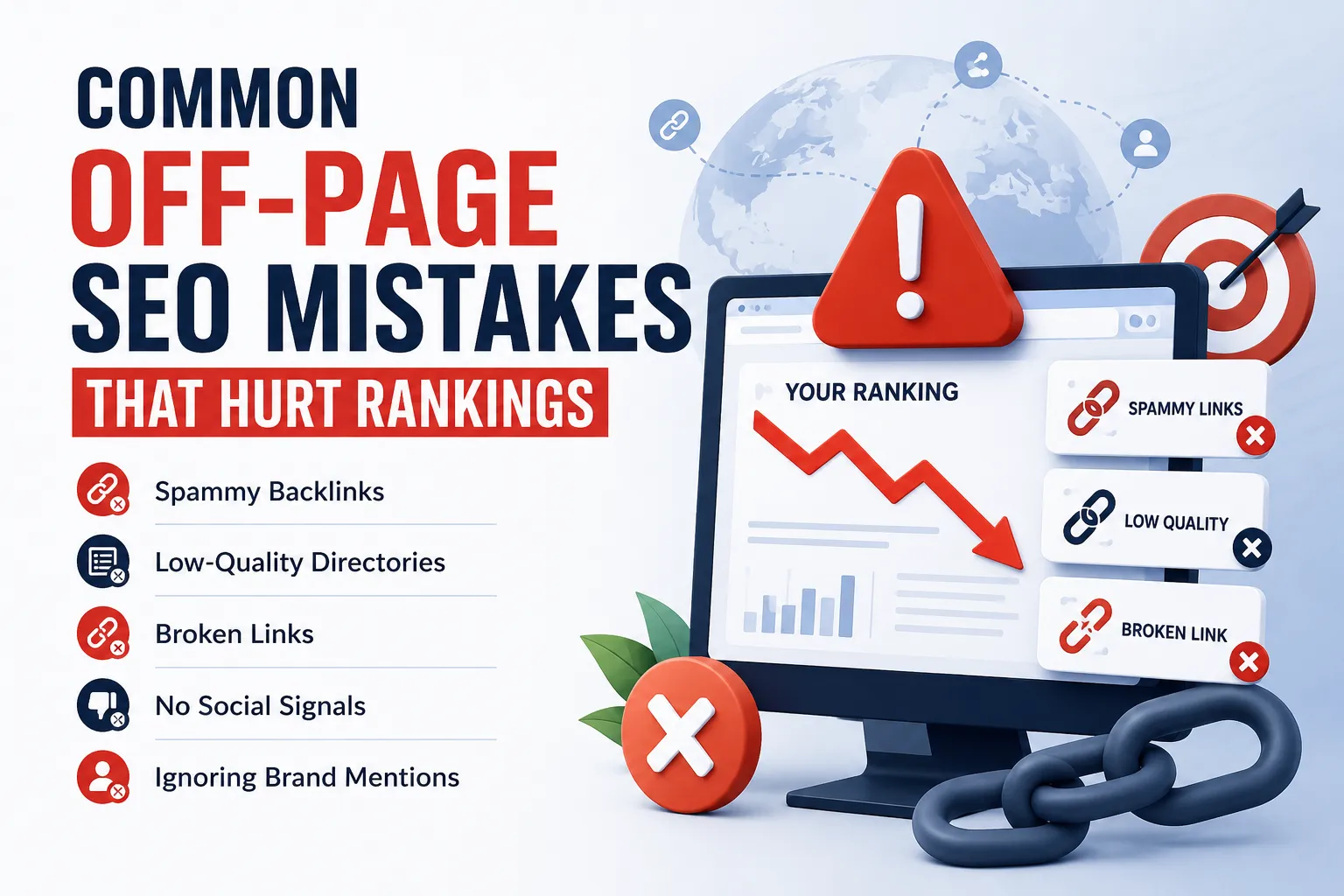
Building a strong online presence requires more than publishing great content and optimizing your website. Off-page SEO plays a major role in helping search engines evaluate your website’s authority, credibility, and relevance. However, using outdated or unethical strategies can do more harm than good. Understanding the most common Off-Page SEO Mistakes is essential if you want to protect your rankings and build sustainable organic growth. In this guide, you’ll learn which off-page SEO errors to avoid, why they negatively impact your website, and the best practices that lead to long-term success.
Off-Page SEO Mistakes: Why They Can Damage Your Rankings
Many website owners focus only on gaining backlinks without considering their quality or relevance. This often leads to Off-Page SEO Mistakes that reduce trust in the eyes of search engines.
Google’s algorithms have evolved significantly over the years. Today, they evaluate backlinks, brand mentions, topical relevance, website authority, and user trust rather than simply counting the number of incoming links. Manipulative SEO practices that once worked can now trigger ranking declines or manual penalties.
Avoiding common off-page mistakes helps create a natural backlink profile while improving your website’s reputation across the web.
Understanding How Off-Page SEO Works
Off-page SEO refers to all optimization activities that occur outside your own website. These include earning backlinks, digital PR, guest blogging, brand mentions, influencer collaborations, online reviews, and local citations.
The goal is to demonstrate to search engines that your website is trusted by other authoritative sources within your industry.
When off-page SEO is implemented correctly, it strengthens your website’s credibility and supports long-term organic visibility.
Common Off-Page SEO Mistakes You Should Avoid
Many businesses unknowingly repeat the same Common off-page SEO mistakes, believing they will improve rankings quickly.
Unfortunately, shortcuts often produce the opposite result. Purchasing backlinks, using irrelevant directories, participating in private blog networks, or relying on automated software creates unnatural backlink profiles that search engines can detect.
Understanding these Common off-page SEO mistakes helps you build a healthier SEO strategy focused on long-term authority instead of temporary gains.
Buying Low-Quality Backlinks
One of the biggest SEO mistakes is purchasing backlinks from unreliable providers.
Paid links from spammy websites rarely provide lasting value. Instead, they increase the risk of algorithmic penalties and damage your website’s reputation.
Search engines prioritize naturally earned editorial backlinks that exist because your content provides genuine value to readers.
Ignoring Link Relevance
A backlink from an unrelated website carries far less value than one from a trusted source within your industry.
For example, if you operate a healthcare website, links from respected medical publications are much more valuable than links from unrelated entertainment blogs.
Relevance strengthens topical authority while helping search engines better understand your expertise.
Link Building Mistakes That Reduce Website Authority
Many Link building mistakes occur when website owners focus only on increasing backlink numbers.
Excessive reciprocal links, keyword-rich anchor text, comment spam, forum spam, and automated outreach campaigns all create unnatural linking patterns that search engines increasingly recognize.
Avoiding these Link building mistakes helps build a backlink profile based on quality, diversity, and editorial value rather than manipulation.
Ignoring Brand Mentions and Online Reputation
Off-page SEO extends beyond backlinks.
Search engines also evaluate brand mentions, customer reviews, citations, and overall online reputation. Ignoring these signals means missing opportunities to strengthen trust and authority.
Encourage satisfied customers to leave genuine reviews, participate in industry discussions, and maintain a consistent presence across reputable platforms.
Positive brand recognition contributes to long-term SEO success.
Explore More : SEO Freelancer in Anantapuram | SEO Freelancer in Tirupati | SEO Freelancer in Mangalagiri
How Off-Page SEO Affects Rankings
Many beginners underestimate How off-page SEO affects rankings.
Search engines use external signals to determine whether your website deserves higher visibility. Quality backlinks, brand mentions, digital PR, and authoritative citations help establish expertise and trust.
Understanding How off-page SEO affects rankings also highlights why poor-quality backlinks, spammy outreach, and manipulative SEO tactics often lead to ranking losses rather than improvements.
Building authority naturally remains the safest long-term approach.
Effective Off-Page SEO Techniques for Sustainable Growth
Instead of risky shortcuts, focus on proven Off-page SEO techniques that align with Google’s quality guidelines.
Create valuable content that naturally attracts backlinks. Publish original research, expert guides, case studies, and useful resources that other websites genuinely want to reference.
Another of the most effective Off-page SEO techniques is building relationships with journalists, bloggers, influencers, and industry experts. These connections often result in natural editorial mentions that strengthen your website’s authority.
Follow Off-Page SEO Best Practices
Successful SEO depends on consistency and quality rather than shortcuts.
Following proven Off-page SEO best practices helps protect your website from future algorithm updates while improving long-term rankings.
Focus on earning backlinks naturally, maintaining a diverse backlink profile, monitoring toxic links, creating shareable content, and building genuine industry relationships.
Another important part of Off-page SEO best practices is performing regular backlink audits to identify harmful or irrelevant links before they negatively affect your website.
Build Authority with Valuable Content
Content remains one of the strongest drivers of natural off-page SEO success.
Publish in-depth articles, industry reports, tutorials, expert interviews, comparison guides, and evergreen resources that solve real user problems.
Websites are much more likely to reference useful content than promotional pages, making quality content one of the most effective long-term link-building assets.
Common Signs Your Off-Page SEO Needs Improvement
Even websites with strong content may struggle if their off-page strategy is weak.
Watch for these warning signs:
- Declining keyword rankings, poor referral traffic, few referring domains, low brand mentions, toxic backlinks, and weak online authority.
- Low engagement from outreach campaigns, inconsistent backlink growth, poor review profiles, limited industry recognition, and outdated link-building strategies.
Regular SEO audits help identify these issues early, allowing you to make informed improvements before rankings decline further.
Businesses aiming to strengthen their online authority often combine ethical outreach, digital PR, content marketing, and backlink analysis with experienced agencies such as DigitalParm to build sustainable off-page SEO strategies.
Conclusion
Avoiding Off-Page SEO Mistakes is just as important as implementing effective optimization strategies. Ethical link building, strong brand reputation, relevant backlinks, and valuable content create long-term authority that search engines reward. Rather than focusing on quick wins, invest in sustainable practices that strengthen trust, improve visibility, and support lasting organic growth. Consistent effort and quality-focused optimization will always produce better results than manipulative SEO tactics.
Frequently Asked Questions
1. What are the most common off-page SEO mistakes?
Buying backlinks, using spammy directories, excessive link exchanges, and ignoring backlink quality are among the most common mistakes.
2. Can poor backlinks hurt SEO?
Yes. Low-quality or spammy backlinks can reduce trust and negatively affect search rankings.
3. How often should I audit my backlinks?
Review your backlink profile regularly, ideally every few months, to identify harmful or irrelevant links.
4. Is guest blogging still a good off-page SEO strategy?
Yes. Publishing valuable guest content on reputable websites remains an effective way to earn quality backlinks.
5. What is the safest off-page SEO strategy?
Creating valuable content, earning natural backlinks, building industry relationships, and maintaining a strong online reputation are the safest long-term strategies.


