


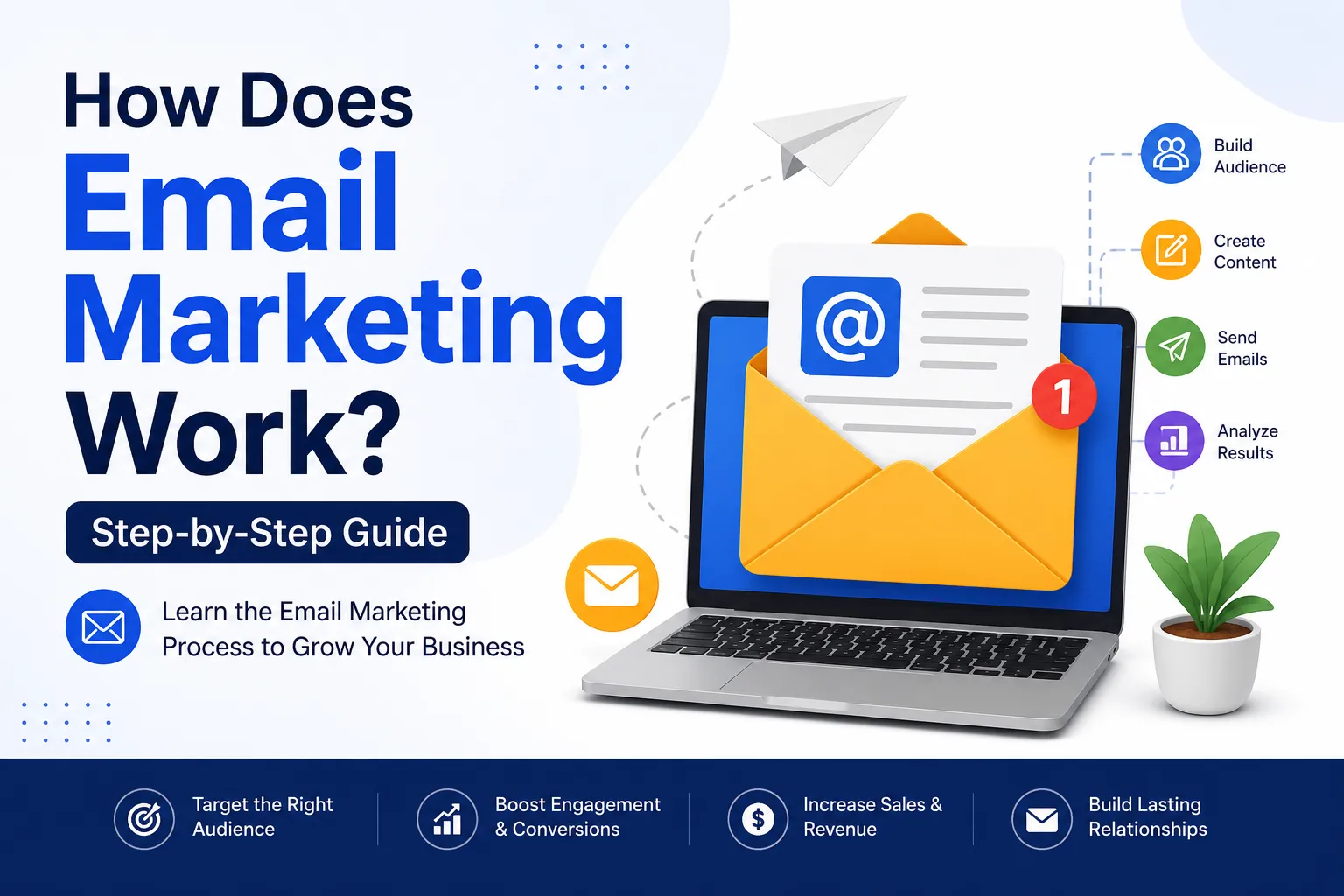
Email remains one of the most effective digital marketing channels for businesses of every size. If you’ve ever wondered How Does Email Marketing Work, the answer is simple: it helps businesses build relationships with subscribers by sending valuable, personalized, and timely emails that encourage engagement and conversions. From welcome emails and newsletters to promotional campaigns and follow-up messages, email marketing allows brands to communicate directly with their audience without relying on social media algorithms.
Whether you’re a small business owner, marketer, or entrepreneur, understanding How Does Email Marketing Work is essential for creating campaigns that generate leads, increase customer loyalty, and boost sales. In this step-by-step guide, you’ll learn the complete email marketing process, best practices, and strategies to achieve better results.
What Is Email Marketing?
Email marketing is a digital marketing strategy that involves sending emails to a list of subscribers to promote products, services, content, or business updates. Unlike paid advertising, email marketing allows businesses to maintain direct communication with people who have already shown interest in their brand.
Modern email marketing platforms provide tools for audience segmentation, automation, personalization, analytics, and A/B testing, making campaigns more targeted and effective.
For businesses looking to generate long-term customer relationships, email marketing continues to deliver one of the highest returns on investment among digital marketing channels.
How Does Email Marketing Work? Step-by-Step Process
Understanding How Does Email Marketing Work becomes much easier when you break it into clear steps. Every successful campaign follows a structured workflow that ensures subscribers receive relevant content at the right time.
Step 1: Build an Email List
The first step is collecting email addresses from people who willingly subscribe to your emails.
You can grow your list using website signup forms, lead magnets, newsletter subscriptions, webinars, downloadable guides, free trials, and product registrations.
For Email Marketing for Beginners, building a permission-based email list is the foundation of long-term success. Never purchase email lists, as they often lead to poor engagement and spam complaints.
Step 2: Choose an Email Marketing Platform
Select a reliable email marketing platform that offers features such as:
- Email automation, audience segmentation, drag-and-drop email builders, analytics, A/B testing, personalization, and responsive templates.
Popular platforms include Mailchimp, Brevo, Kit, ActiveCampaign, HubSpot, and Constant Contact.
Choosing the right platform simplifies the entire Email Marketing Process while saving time through automation.
Step 3: Segment Your Audience
Not every subscriber has the same interests.
Divide your email list based on customer behavior, demographics, purchase history, location, interests, or engagement level.
Segmentation helps you send personalized content that improves open rates and conversions throughout the Email Marketing Process.
Step 4: Create Valuable Email Content
Every email should provide value.
Examples include:
- Educational articles, product updates, exclusive offers, event invitations, customer success stories, seasonal promotions, abandoned cart reminders, newsletters, and personalized recommendations.
Write compelling subject lines, maintain a conversational tone, include clear calls to action, and optimize emails for mobile devices.
Step 5: Automate Email Campaigns
Marketing automation allows businesses to send emails automatically based on user actions.
Examples include welcome emails, birthday greetings, abandoned cart reminders, onboarding sequences, follow-up emails, and re-engagement campaigns.
Automation ensures subscribers receive relevant messages without requiring manual effort.
Step 6: Analyze Campaign Performance
Monitor key metrics such as:
Open rate, click-through rate, conversion rate, unsubscribe rate, bounce rate, spam complaints, and overall ROI.
These insights help improve future campaigns and maximize performance.
Why Email Marketing Is So Effective
Email marketing remains successful because it creates direct communication between businesses and customers.
Unlike social media, businesses own their email lists and are not dependent on changing algorithms.
Other advantages include:
- Personalized messaging
- Cost-effective marketing
- Higher customer retention
- Better lead nurturing
- Measurable campaign performance
- Strong return on investment
These strengths explain why businesses across industries continue investing in email marketing.
Explore More : SEO Freelancer in Jamin | SEO Freelancer in Palin | SEO Freelancer in Hayuliang
Email Marketing for Beginners: Essential Tips
Starting with email marketing doesn’t have to be complicated.
Email Marketing for Beginners should focus on creating trust before selling products or services.
Begin with a welcome email introducing your business.
Send helpful educational content consistently.
Avoid overwhelming subscribers with excessive promotional emails.
Maintain a clean email list by removing inactive subscribers regularly.
Always test subject lines and email layouts before launching campaigns.
Following these simple practices helps beginners develop stronger relationships with subscribers while improving long-term engagement.
How to Start Email Marketing Successfully
Many businesses ask How to Start Email Marketing without overwhelming themselves.
The answer is to begin with a simple strategy.
Define your goals first. These may include generating leads, increasing sales, driving website traffic, or building customer loyalty.
Next, identify your target audience and create a lead magnet that encourages subscriptions.
Choose an email platform, build your first automated welcome sequence, and create a monthly content calendar.
When learning How to Start Email Marketing, consistency matters more than sending frequent promotional emails.
Email Marketing Campaign Guide: Best Practices
A successful campaign requires more than attractive email designs.
This Email Marketing Campaign Guide covers several important best practices.
Write attention-grabbing subject lines.
Personalize emails using subscriber names and interests.
Keep content concise and easy to read.
Use responsive email templates for mobile users.
Include one clear call-to-action per email.
Optimize images without slowing email loading.
Test different subject lines and CTAs through A/B testing.
Following this Email Marketing Campaign Guide helps improve engagement while increasing click-through and conversion rates.
Benefits of Email Marketing for Businesses
The Benefits of Email Marketing extend far beyond generating immediate sales.
Businesses use email marketing to strengthen customer relationships, educate prospects, promote new products, announce events, collect customer feedback, and increase repeat purchases.
Some major advantages include:
- High return on investment, direct customer communication, advanced personalization, automation, audience segmentation, measurable analytics, stronger customer loyalty, improved brand awareness, increased website traffic, and better lead nurturing.
Because of these advantages, the Benefits of Email Marketing continue to make it one of the most valuable digital marketing strategies available today.
Common Email Marketing Mistakes to Avoid
Even experienced marketers make mistakes that reduce campaign performance.
Common issues include sending emails without audience segmentation, writing misleading subject lines, ignoring mobile optimization, purchasing email lists, sending too many promotional emails, neglecting personalization, and failing to analyze campaign performance.
Regular testing and optimization help eliminate these problems while improving long-term results.
Tools That Simplify Email Marketing
Several professional tools make email marketing easier.
Popular platforms include Mailchimp, Brevo, HubSpot, Kit, ActiveCampaign, Constant Contact, GetResponse, AWeber, Campaign Monitor, and Zoho Campaigns.
These tools offer automation, analytics, subscriber management, landing pages, templates, segmentation, and reporting features that improve campaign efficiency.
DigitalParm recommends choosing a platform that aligns with your business goals, budget, and expected growth.
Conclusion
Understanding How Does Email Marketing Work helps businesses build meaningful customer relationships while driving consistent growth. From building an email list and creating valuable content to automating campaigns and analyzing results, every step contributes to better engagement and higher conversions. By following proven strategies, avoiding common mistakes, and focusing on subscriber value, businesses can create sustainable email marketing success that supports long-term digital growth.
Frequently Asked Questions
1. What is email marketing?
Email marketing is a digital strategy that uses emails to communicate with subscribers, promote products, and build customer relationships.
2. Is email marketing suitable for beginners?
Yes. With the right platform and strategy, beginners can easily start building and managing email campaigns.
3. How often should I send marketing emails?
Most businesses achieve good results by sending one to four emails per month, depending on audience preferences.
4. What is the biggest benefit of email marketing?
It provides direct communication with customers while delivering one of the highest returns on investment in digital marketing.
5. Which metrics should I track in email marketing?
Monitor open rate, click-through rate, conversion rate, bounce rate, unsubscribe rate, and overall campaign ROI.


