


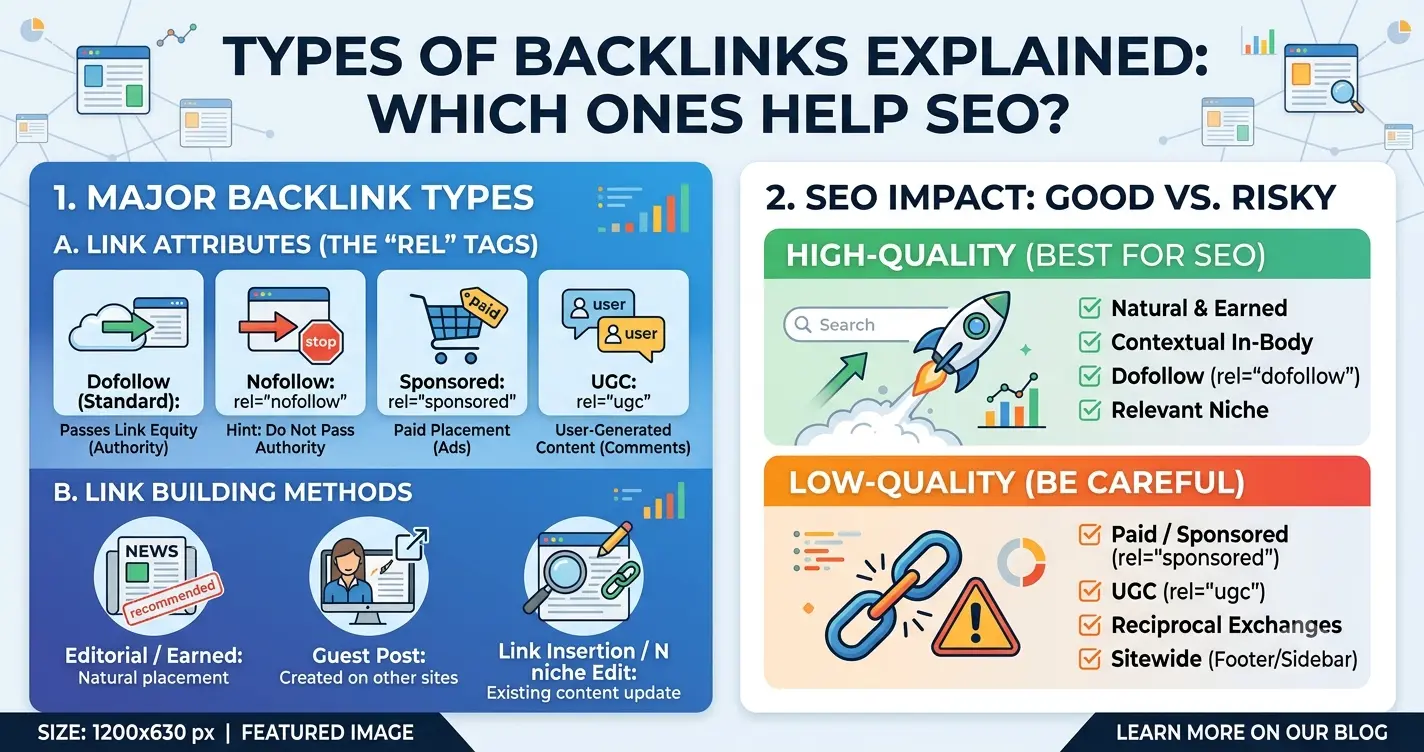
If you’ve spent any time learning about search engine optimization, you’ve likely heard that backlinks are one of Google’s most important ranking signals. However, not every backlink carries the same value. Understanding the Types of Backlinks can help you focus on earning links that genuinely improve your website’s authority and organic visibility. Whether you’re a business owner, blogger, or digital marketer, knowing which backlinks help SEO—and which ones to avoid—can make a significant difference in your long-term success.
In this guide, we’ll explain the most important backlink types, how search engines evaluate them, and the best ways to build a healthy backlink profile.
Types of Backlinks: Understanding the Basics
Before exploring the Types of Backlinks, it’s important to understand what a backlink actually is. A backlink is a hyperlink from one website to another. Search engines use these links as signals to determine the credibility, relevance, and authority of a webpage.
The Different types of backlinks vary based on where they come from, how they are earned, and the level of trust they pass to your website. Some links significantly improve SEO performance, while others offer little value or may even harm your rankings if acquired through manipulative practices.
Modern search engine algorithms reward websites that naturally earn backlinks from trustworthy and relevant sources instead of using shortcuts to gain links.
Types of Backlinks That Positively Impact SEO
Not every backlink contributes equally to your website’s performance. The following are the Types of Backlinks that generally provide the most SEO value.
Editorial Backlinks
Editorial backlinks are earned when another website naturally references your content because it provides useful, original, or authoritative information. These are often considered the gold standard among High-quality backlinks because they are given voluntarily rather than requested.
Publishing detailed guides, research reports, industry statistics, and unique insights increases your chances of earning editorial links.
Guest Post Backlinks
Guest posting allows you to contribute valuable content to reputable websites within your industry. When done ethically, guest blogging helps establish authority while earning relevant backlinks.
The focus should always remain on providing useful information rather than simply placing links.
Resource Page Backlinks
Many websites maintain resource pages that recommend helpful articles, tools, and educational content. If your content solves a problem or answers common questions, it may earn placement on these pages.
These backlinks often come from highly relevant websites, making them valuable for long-term SEO.
Business Directory Backlinks
Submitting your website to trustworthy business directories can strengthen your online presence, especially for local businesses. However, only reputable directories should be used since low-quality directories provide little SEO value.
These examples demonstrate the Different types of backlinks that contribute to a natural and diversified backlink profile.
Do Backlinks Help SEO? Here’s Why
A common question among website owners is, Do backlinks help SEO? The answer is yes—but only when they come from credible, relevant, and authoritative sources.
Search engines use backlinks to understand whether other websites trust your content. When respected websites link to your pages, they pass authority signals that help improve search rankings.
Here are some of the biggest SEO benefits backlinks provide:
- Improve domain authority and website credibility.
- Increase organic search visibility.
- Help search engines discover and index pages faster.
- Generate referral traffic from relevant websites.
- Strengthen topical authority within your niche.
These benefits clearly explain why Do backlinks help SEO remains one of the most frequently discussed topics in digital marketing.
High-Quality Backlinks vs Low-Quality Backlinks
When building links, quality matters far more than quantity. A few High-quality backlinks from authoritative websites often outperform hundreds of low-value links.
A quality backlink usually has these characteristics:
- Comes from a trusted, reputable website.
- Is relevant to your industry or topic.
- Appears naturally within useful content.
- Uses contextual anchor text.
- Generates real referral traffic.
On the other hand, backlinks from spam websites, private blog networks, link farms, or irrelevant pages rarely provide lasting SEO value and may even trigger search engine penalties.
Focusing on High-quality backlinks ensures your SEO efforts remain sustainable and aligned with Google’s quality guidelines.
Explore More : Link Building Service in Dum Dum | Link Building Service in Barrackpore | Link Building Service in Kalyani
Natural vs Artificial Backlinks
Understanding Natural vs artificial backlinks is essential for building a healthy backlink profile.
Natural backlinks are earned without asking another website to link to you. They occur because your content offers genuine value, making other publishers want to reference it.
Artificial backlinks, however, are created primarily to manipulate search rankings. These include paid links without proper disclosure, excessive link exchanges, automated link-building software, and spammy directory submissions.
The debate around Natural vs artificial backlinks isn’t complicated. Search engines consistently reward naturally earned links while discouraging manipulative practices designed solely to influence rankings.
Backlink Building Strategies That Actually Work
Successful SEO depends on earning links ethically rather than chasing shortcuts. The best Backlink building strategies focus on creating value that naturally attracts links over time.
Some proven approaches include:
- Publish comprehensive blog posts, industry research, and helpful guides.
- Reach out to relevant websites with genuinely useful resources.
- Write guest articles for reputable industry publications.
- Create original infographics, case studies, and statistics that others want to reference.
- Build relationships with journalists, bloggers, and influencers in your niche.
These Backlink building strategies require consistency, but they create long-term authority that benefits your website for years instead of months.
Backlinks That Can Hurt Your SEO
While quality backlinks improve rankings, poor-quality links can negatively affect your website’s reputation.
Examples of harmful backlinks include:
- Links purchased from unreliable sellers.
- Spam comments containing backlinks.
- Links from hacked websites.
- Private Blog Networks (PBNs).
- Irrelevant foreign-language websites with no topical connection.
Search engines have become increasingly effective at identifying manipulative link patterns. Maintaining a clean backlink profile helps protect your rankings and supports sustainable organic growth.
Regular backlink audits using SEO tools can help identify suspicious links before they become a problem.
Building a Balanced SEO Strategy
Backlinks are powerful, but they should never be your only SEO focus. Strong rankings come from combining quality backlinks with excellent content, technical SEO, user experience, and on-page optimization.
Publishing helpful content consistently encourages other websites to link naturally while also improving user engagement. Optimized page speed, mobile responsiveness, structured internal linking, and clear website architecture all contribute to stronger overall SEO performance.
Many businesses partner with experienced SEO professionals such as DigitalParm to develop ethical backlink campaigns that complement a complete search optimization strategy.
Conclusion
Understanding the Types of Backlinks helps you make smarter SEO decisions and avoid outdated link-building tactics. Rather than chasing hundreds of links, focus on earning relevant, trustworthy backlinks that provide real value to users. Editorial mentions, guest posts, resource page links, and other authoritative backlinks contribute to stronger search visibility and long-term organic growth. Combined with valuable content and ethical SEO practices, a quality backlink profile remains one of the strongest assets for achieving sustainable rankings.
Frequently Asked Questions
1. What are the most valuable types of backlinks?
Editorial backlinks, guest post backlinks, resource page links, and backlinks from authoritative industry websites are generally the most valuable.
2. Do backlinks help SEO for new websites?
Yes. Quality backlinks help search engines discover new websites faster and build authority over time.
3. What is the difference between natural and artificial backlinks?
Natural backlinks are earned because of valuable content, while artificial backlinks are intentionally created to manipulate search rankings.
4. How many backlinks does a website need?
There is no fixed number. A few relevant, high-quality backlinks are usually more effective than many low-quality ones.
5. Can bad backlinks affect SEO?
Yes. Spammy or manipulative backlinks can reduce your website’s credibility and potentially impact search rankings if they violate search engine guidelines.


