


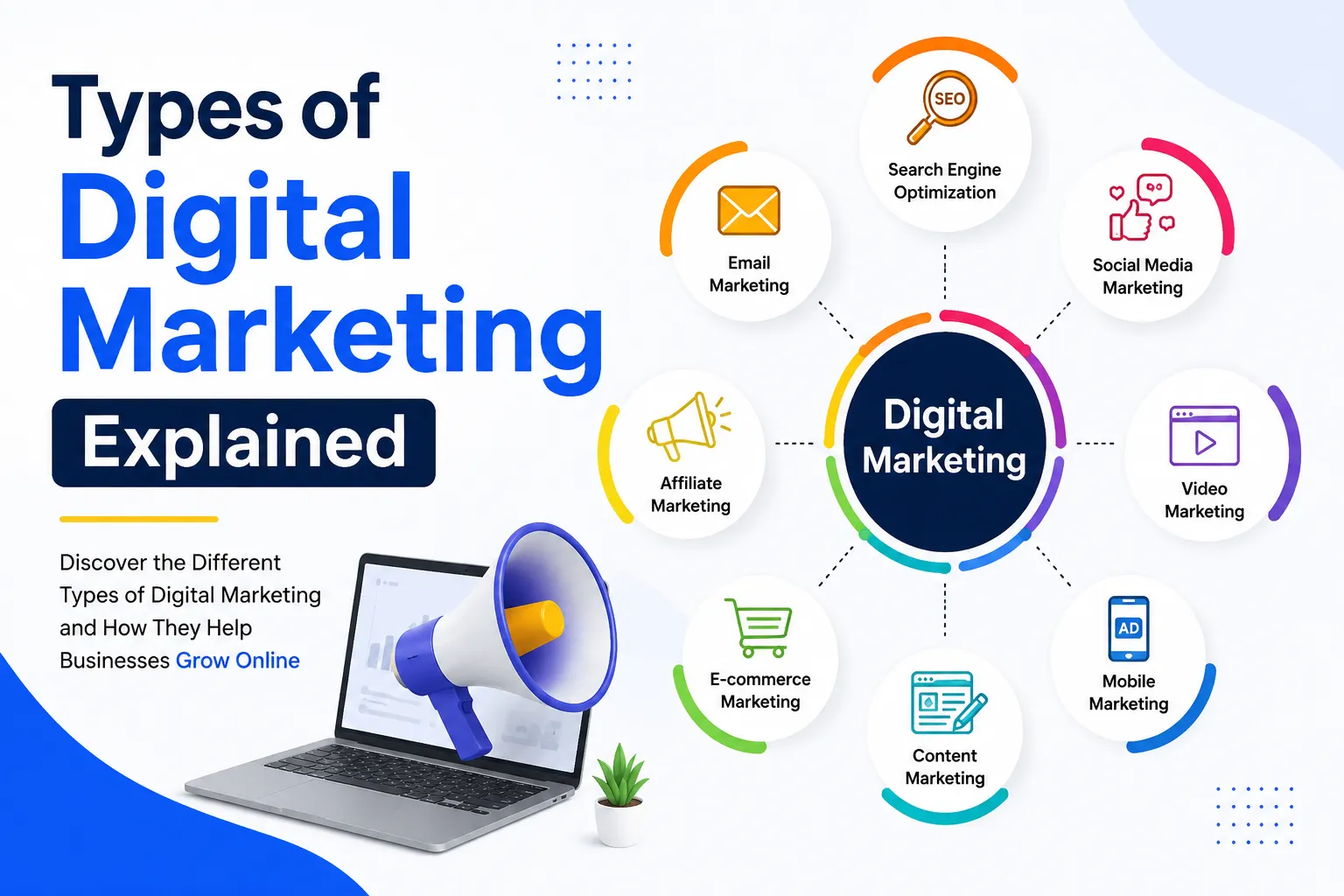
In today’s digital-first world, understanding the Types of Digital Marketing is essential for businesses looking to build a strong online presence and connect with their target audience. From search engines and social media to email campaigns and paid advertising, every marketing channel serves a unique purpose. Knowing which strategy fits your business goals can improve visibility, generate qualified leads, and increase revenue. In this complete guide, you’ll learn about the different types of digital marketing, how they work, and when to use each one for maximum results.
Why Understanding Types of Digital Marketing Matters
The online marketplace has become more competitive than ever. Consumers now discover brands through Google searches, social media platforms, YouTube videos, emails, and online reviews before making purchasing decisions.
Instead of relying on a single promotion method, successful businesses combine multiple digital marketing channels to create a seamless customer journey. Each channel contributes differently—some build awareness, while others focus on generating leads or increasing sales.
By understanding the strengths of each marketing approach, businesses can invest their budget more wisely and create campaigns that deliver measurable results.
Types of Digital Marketing Every Business Should Know
There isn’t one universal strategy that works for every business. The most successful companies combine several marketing techniques depending on their audience, industry, and goals.
Below are the most effective different types of digital marketing used today.
1. Search Engine Optimization (SEO)
SEO focuses on improving a website’s visibility in search engine results. When users search for products, services, or information, optimized websites have a better chance of appearing on the first page of Google.
SEO includes:
- Keyword research
- On-page optimization
- Technical SEO
- Link building
- Local SEO
- Content optimization
SEO delivers long-term organic traffic and helps establish website authority without paying for every visitor.
2. Content Marketing
Content marketing involves creating valuable resources that educate, inform, or solve customer problems.
Popular content formats include:
- Blog articles
- Videos
- Infographics
- Case studies
- E-books
- Podcasts
- Webinars
High-quality content supports SEO, builds trust, and encourages visitors to return to your website. It is also one of the most effective online marketing strategies for establishing expertise within an industry.
3. Social Media Marketing
Social media platforms allow businesses to engage directly with their audience while building brand awareness.
Popular platforms include:
- X
- YouTube
- TikTok
Businesses use these digital marketing channels to share content, promote products, answer customer questions, and build long-term relationships.
Consistent engagement helps increase brand loyalty and customer trust.
4. Pay-Per-Click (PPC) Advertising
PPC advertising allows businesses to display ads on search engines and social media platforms.
Unlike SEO, PPC produces immediate visibility because advertisers pay only when someone clicks their advertisement.
Popular PPC platforms include:
- Google Ads
- Microsoft Advertising
- Meta Ads
- LinkedIn Ads
This approach works well for businesses seeking quick traffic, seasonal promotions, and lead generation.
5. Email Marketing
Email marketing remains one of the highest-return digital marketing techniques.
Businesses use email campaigns to:
- Welcome new subscribers
- Share newsletters
- Promote products
- Send personalized recommendations
- Recover abandoned shopping carts
- Build customer loyalty
Modern email automation allows businesses to deliver highly relevant content based on customer behavior.
6. Affiliate Marketing
Affiliate marketing involves partnering with publishers, bloggers, influencers, or content creators who promote products in exchange for commissions.
This performance-based model allows businesses to expand their reach while paying only for successful conversions.
Affiliate marketing has become one of the fastest-growing digital marketing methods because it reduces advertising risk while increasing brand exposure.
7. Influencer Marketing
Influencer marketing leverages trusted creators who already have engaged audiences.
Rather than promoting directly to consumers, businesses collaborate with influencers to introduce products in an authentic way.
This strategy works especially well for fashion, beauty, travel, technology, fitness, and lifestyle brands.
Many successful digital marketing examples include influencer partnerships that significantly increase engagement and product sales.
8. Video Marketing
Video has become one of the most consumed forms of online content.
Businesses create videos for:
- Product demonstrations
- Tutorials
- Customer testimonials
- Brand storytelling
- Educational content
- Live events
Platforms such as YouTube, Instagram Reels, Facebook Videos, and TikTok continue driving massive user engagement.
Video content also improves website retention and conversion rates.
9. Mobile Marketing
With most internet users accessing websites through smartphones, mobile marketing has become increasingly important.
Mobile marketing includes:
- SMS campaigns
- Push notifications
- Mobile-friendly websites
- In-app advertising
- Mobile search optimization
Responsive website design ensures customers enjoy a seamless browsing experience across all devices.
10. Local SEO and Google Business Profile
Businesses serving specific geographic areas benefit from Local SEO.
Optimizing Google Business Profile, collecting customer reviews, and targeting local keywords helps businesses appear in location-based search results.
Local SEO is particularly valuable for restaurants, clinics, retail stores, law firms, educational institutions, and service providers.
Explore More : SEO Freelancer in Pendra | SEO Freelancer in Naya Baradwar | SEO Freelancer in Narayanpur
Choosing the Right Types of Digital Marketing
Selecting the right marketing strategy depends on several factors.
Before investing, businesses should evaluate:
- Business goals
- Target audience
- Industry competition
- Available budget
- Marketing timeline
- Customer buying behavior
For example, a startup may prioritize SEO and content marketing, while an eCommerce business may combine PPC advertising, email marketing, and social media campaigns.
Understanding these priorities allows companies to build sustainable online marketing strategies that support long-term business growth.
How These Digital Marketing Methods Work Together
Many beginners assume each strategy works independently. In reality, successful campaigns integrate multiple channels into one unified customer journey.
A typical customer journey may look like this:
A user discovers a blog through Google Search, follows the brand on Instagram, subscribes to an email newsletter, watches YouTube videos, and finally purchases after receiving a promotional email.
This demonstrates how modern digital marketing methods complement each other rather than competing.
Businesses that integrate SEO, content marketing, social media, email, and paid advertising usually achieve stronger results than those relying on one channel alone.
Real Digital Marketing Examples
Understanding practical applications helps businesses choose the right strategy.
Here are a few digital marketing examples seen every day:
A local restaurant appears in Google Maps through Local SEO and attracts nearby customers.
An online clothing store uses Instagram Reels to showcase new collections while running Meta Ads to increase sales.
A software company publishes educational blogs optimized for search engines and captures leads through downloadable guides.
An eCommerce brand sends personalized email offers based on previous purchases to increase repeat sales.
These real-world scenarios illustrate how different marketing techniques solve different business challenges.
Measuring Digital Marketing Success
Every campaign should be monitored using measurable performance indicators.
Businesses commonly track:
- Website traffic
- Organic keyword rankings
- Conversion rates
- Click-through rates (CTR)
- Customer acquisition cost
- Return on investment (ROI)
- Engagement metrics
- Email open rates
Analytics platforms help businesses identify which marketing channels generate the highest returns and where improvements are needed.
Companies like DigitalParm often combine these insights with strategic planning to continuously optimize campaign performance.
Conclusion
Understanding the Types of Digital Marketing helps businesses choose the right combination of strategies to reach their audience, build trust, and increase online growth. Whether it’s SEO, content marketing, social media, email marketing, PPC, influencer collaborations, or video campaigns, each approach plays a valuable role in a successful marketing strategy. Rather than relying on a single channel, businesses that integrate multiple techniques and continuously analyze performance are better positioned for long-term success in the evolving digital landscape.
Frequently Asked Questions (FAQs)
1. What are the main types of digital marketing?
The main types include SEO, content marketing, social media marketing, email marketing, PPC advertising, affiliate marketing, influencer marketing, video marketing, mobile marketing, and Local SEO.
2. Which digital marketing channel is best for beginners?
SEO and content marketing are excellent starting points because they build long-term organic traffic and brand authority.
3. Why are multiple digital marketing channels important?
Using multiple channels helps businesses reach customers at different stages of the buying journey and improves overall marketing performance.
4. How do businesses choose the right digital marketing strategy?
Businesses should consider their goals, audience, budget, competition, and industry before selecting the most suitable marketing methods.
5. Can small businesses use all types of digital marketing?
Yes. Small businesses can combine strategies like SEO, social media, email marketing, and Local SEO based on their resources and growth objectives.


