


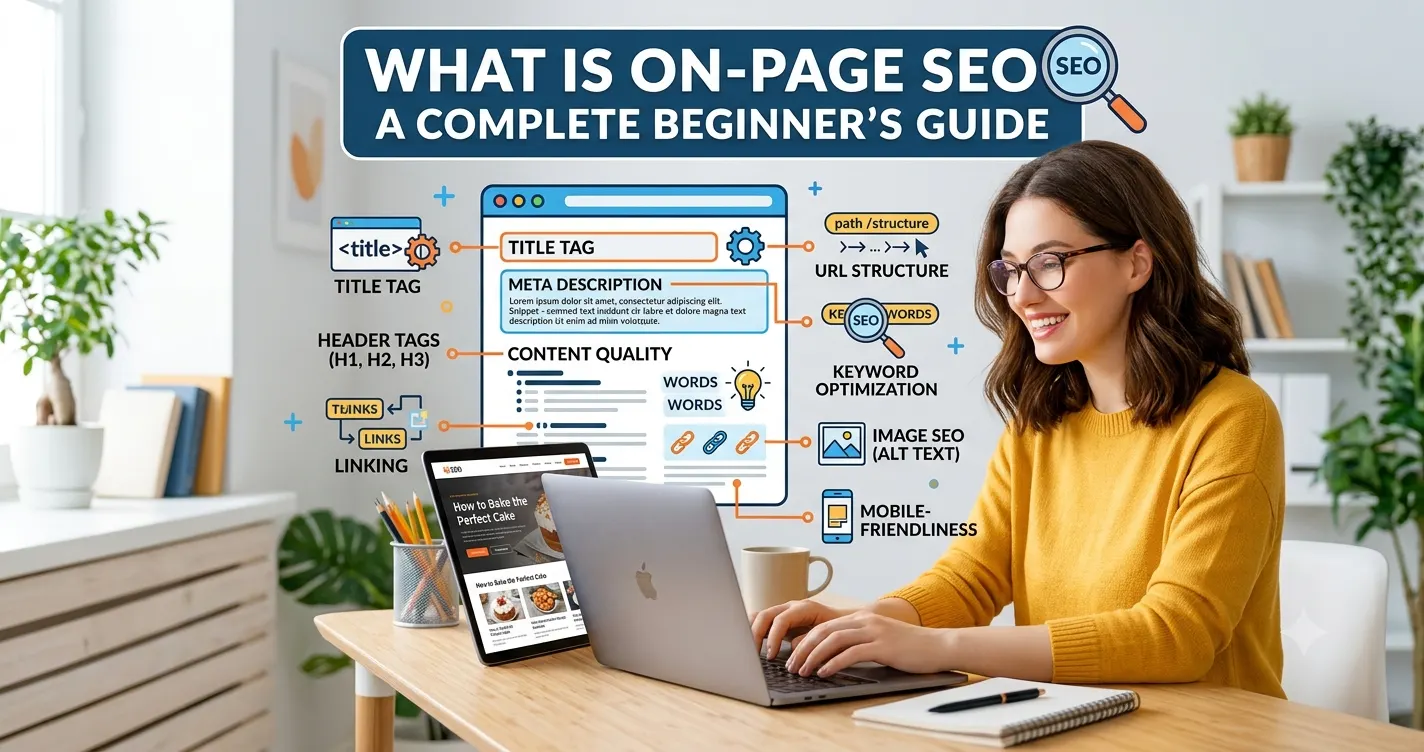
If you’re new to search engine optimization, one of the first questions you’ll likely ask is What Is On-Page SEO and why it matters for your website. On-page SEO is the process of optimizing individual web pages so they rank higher in search engine results and provide a better experience for users. From writing high-quality content and optimizing title tags to improving page speed and internal linking, every element on a webpage contributes to its performance. Learning What Is On-Page SEO is the first step toward building a website that attracts more organic traffic and performs well on Google.
What Is On-Page SEO? Understanding the Basics
To understand What Is On-Page SEO, think of it as everything you can optimize directly on your website to improve search visibility. Unlike off-page SEO, which focuses on external signals such as backlinks, on-page SEO involves optimizing content, HTML elements, URLs, images, and website structure.
Search engines like Google analyze these elements to determine whether a webpage is relevant, trustworthy, and useful for a specific search query. When your pages are properly optimized, search engines can better understand your content and match it with users searching for related topics.
On-page SEO also improves user experience by making pages easier to read, navigate, and access across different devices.
What Is On-Page SEO? Why It Is Important
Many beginners underestimate the importance of on-page optimization. However, understanding What Is On-Page SEO helps you build a strong foundation for every other SEO effort.
Even if your website earns quality backlinks or has excellent technical SEO, poorly optimized pages may struggle to rank because search engines cannot fully understand their content.
Effective on-page SEO helps:
- Improve content relevance, keyword targeting, page structure, user experience, internal linking, and search visibility.
- Increase organic traffic, improve click-through rates, support faster indexing, enhance mobile usability, and strengthen topical authority.
These benefits make on-page SEO one of the most valuable long-term investments for any website.
On-Page SEO for Beginners: Where to Start
If you’re exploring On-page SEO for beginners, the best place to start is understanding user intent.
Every search query has a purpose. Some users want information, while others are looking to purchase a product or compare different solutions. Before creating content, identify exactly what your audience wants to learn.
Successful On-page SEO for beginners also involves writing clear, well-structured content that answers questions better than competing pages. Focus on quality rather than keyword repetition, and organize your information using logical headings and subheadings.
Essential On-Page SEO Techniques
Learning effective On-page SEO techniques helps improve both search rankings and user experience.
Start by optimizing title tags, meta descriptions, URLs, heading structure, image alt text, and internal links. Include your primary keyword naturally while also using semantically related terms throughout the content.
Another important aspect of On-page SEO techniques is improving page speed, mobile responsiveness, and readability. Fast-loading pages with clean formatting encourage visitors to stay longer and engage with your content.
Search engines reward websites that prioritize user experience alongside keyword relevance.
Build Content Around User Intent
One of the biggest ranking factors today is creating content that satisfies search intent.
Rather than simply targeting keywords, answer the questions users are actually asking. Provide practical advice, examples, comparisons, and actionable solutions.
Use short paragraphs, descriptive headings, and clear explanations that make information easy to understand. This improves both readability and engagement while increasing the likelihood of earning better rankings.
Explore More : SEO Freelancer in Haridwar | SEO Freelancer in Dehradun | SEO Freelancer in Telgaon
Follow an On-Page SEO Checklist
Using an organized On-page SEO checklist ensures every important optimization task is completed before publishing a page.
Review your title tag, meta description, headings, keyword placement, internal links, images, page speed, mobile usability, and content quality before making the page live.
An effective On-page SEO checklist helps maintain consistency across your website while reducing the chances of missing critical optimization opportunities.
Understanding On-Page SEO Ranking Factors
Google evaluates numerous On-page SEO ranking factors when deciding how webpages should rank in search results.
These include content quality, keyword relevance, heading hierarchy, page speed, mobile friendliness, internal linking, user engagement, structured data, image optimization, and secure HTTPS connections.
Understanding On-page SEO ranking factors allows you to focus your efforts on improvements that have the greatest impact instead of chasing outdated SEO myths.
Remember that Google’s algorithms increasingly reward pages that provide genuine value to users.
How to Optimize a Website for SEO Step by Step
Many website owners ask How to optimize a website for SEO without becoming overwhelmed by technical details.
Start by performing keyword research and understanding your target audience. Create original, informative content that answers specific questions and naturally includes relevant keywords.
Next, optimize your title tags, headings, images, internal links, and URLs while ensuring your pages load quickly and display correctly on mobile devices.
Learning How to optimize a website for SEO also involves monitoring performance through analytics, updating outdated content, and continuously improving pages based on user behavior and search trends.
SEO is an ongoing process rather than a one-time task.
Common On-Page SEO Mistakes Beginners Should Avoid
Many beginners unintentionally make mistakes that reduce their search visibility.
Avoid keyword stuffing, duplicate content, poorly written title tags, broken internal links, oversized images, slow-loading pages, and thin content with little user value.
Ignoring mobile optimization or publishing outdated information can also limit your website’s ability to compete effectively in search results.
Consistently reviewing your pages helps identify and correct these issues before they affect rankings.
Best Practices for Long-Term Success
Building strong on-page SEO requires consistency rather than shortcuts.
Regularly update older content, improve internal linking, optimize new images, refresh statistics, and monitor keyword performance. Focus on creating content that remains valuable over time instead of chasing temporary trends.
Search engines increasingly reward websites that demonstrate expertise, authority, and trustworthiness while providing excellent user experiences.
Businesses looking to improve their overall search visibility often combine content optimization, technical SEO, and strategic planning with experienced agencies such as DigitalParm to achieve sustainable long-term growth.
Conclusion
Understanding What Is On-Page SEO is essential for anyone who wants to improve their website’s visibility in search engines. By optimizing content, page structure, metadata, images, and user experience, you help search engines better understand your pages while making them more valuable for visitors. Consistently applying proven on-page optimization techniques creates a strong SEO foundation that supports higher rankings, increased organic traffic, and long-term online success.
Frequently Asked Questions
1. What is on-page SEO?
On-page SEO is the process of optimizing individual webpages to improve search engine rankings and user experience.
2. Is on-page SEO important for beginners?
Yes. It provides the foundation for improving website visibility and attracting organic traffic.
3. How often should I update on-page SEO?
Review and update important pages regularly to keep content accurate and competitive.
4. Does on-page SEO improve Google rankings?
Yes. Proper optimization helps search engines understand your content and increases ranking opportunities.
5. Can I do on-page SEO without technical knowledge?
Yes. Many on-page SEO improvements, such as optimizing content, headings, and metadata, can be implemented without advanced technical skills.


